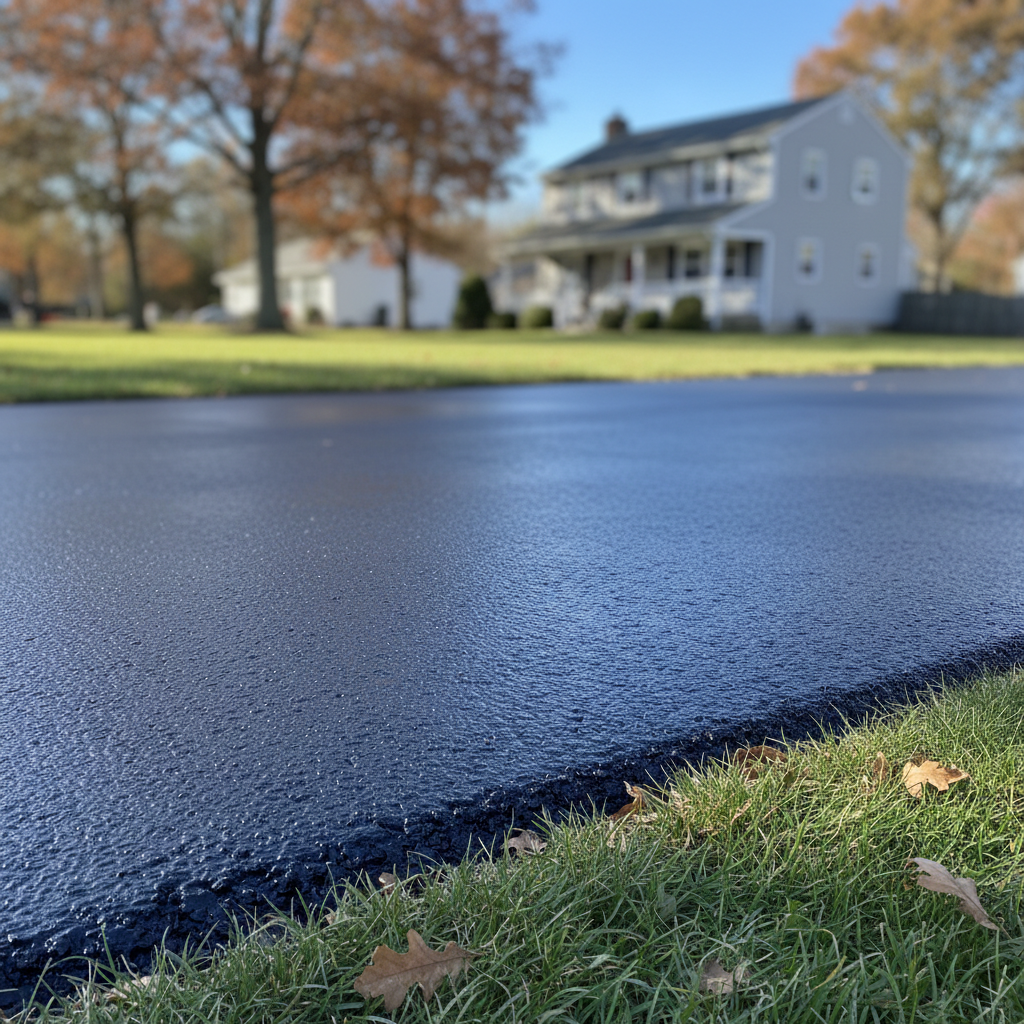
Alright, let's talk about sealcoating. I get a lot of questions about this from folks all over Toms River, from the newer developments near the Parkway to the older homes down by the bay. There's a lot of misinformation out there, and I want to clear things up for you. As a contractor, I've seen it all, and I'm here to give you the straight scoop, not some marketing pitch. Here are the questions I hear most often:
What exactly is sealcoating and why do I need it?
Simply put, sealcoating is a protective layer applied to your asphalt driveway. Think of it like sunscreen for your pavement, or a fresh coat of paint on your house. It's usually a coal tar or asphalt emulsion-based product mixed with fillers, polymers, and water. When we put it down, it dries to form a barrier.
Why do you need it? Well, your asphalt driveway is constantly getting hammered by the sun's UV rays, rain, snow, and chemicals like oil and gas. UV rays break down the asphalt binder, making it brittle and causing it to lose its dark color. Water seeps into cracks, and when it freezes and expands, it makes those cracks even bigger. Sealcoating helps prevent all that. It replenishes the oils in the asphalt, keeps water out, and protects against chemical spills. It also gives your driveway that nice, dark, new look again, which definitely boosts curb appeal.
How often should I sealcoat my driveway?
This is probably the most common question I get, and there's no one-size-fits-all answer. Generally, for a residential driveway, I recommend sealcoating every two to three years. Some folks think they need it every year, but that's usually overkill and can actually lead to a buildup that cracks and peels. On the flip side, waiting five or six years is too long; by then, your asphalt is probably already showing significant wear and tear.
It really depends on a few things: how much sun your driveway gets, how much traffic it sees, and the quality of the original asphalt. If you've got a busy family with multiple cars coming and going all day, you might lean towards the two-year mark. If it's a quiet street and your driveway is mostly shaded, you might be able to stretch it to three. We get some pretty harsh winters here in Toms River, with all the freeze-thaw cycles, so staying on top of it is important.
What's the best time of year to sealcoat in New Jersey?
Timing is everything when it comes to sealcoating. You need consistent warm temperatures for the product to cure properly. Here in Toms River, that usually means late spring, summer, and early fall. We're looking for daytime temperatures consistently above 50°F (10°C) and no rain in the forecast for at least 24-48 hours after application.
Applying sealcoat in cooler temperatures means it won't cure right, and it'll wear off much faster. Trying to do it too late in the fall when nights are getting cold is a waste of money. We typically start our sealcoating season around May and run through October, weather permitting. You want to avoid those super hot, humid days too, as it can dry too fast and not penetrate properly.
Can I sealcoat my driveway myself, or should I hire a pro?
Look, you can absolutely buy buckets of sealcoat from the big box stores and try to do it yourself. And for a small, perfectly flat, brand-new driveway, you might get an okay result. But honestly, for most homeowners, especially with an older, larger, or sloped driveway, hiring a professional like Classic Asphalt Co. is usually the better bet.
Here's why: We have commercial-grade products that are much more durable than what you'll find at the store. We've got the right equipment for proper cleaning, crack filling, and application, which makes a huge difference in how long the sealcoat lasts and how good it looks. Plus, we know how to properly prepare the surface, which is key. If you don't clean it right or fill the cracks properly, even the best sealcoat won't do its job. It's a messy job, and if you're not experienced, you can end up with streaks, uneven coverage, or even tracking it onto your lawn or sidewalk. Save yourself the headache.
What's the difference between coal tar and asphalt emulsion sealers?
Good question. These are the two main types of sealcoat you'll encounter. For a long time, coal tar was the go-to. It's incredibly durable, resistant to oil and gas, and provides a very dark, rich black finish. The downside is that it has a strong odor, and there have been some environmental concerns raised over the years about its chemical composition.
Asphalt emulsion sealers are made from asphalt cement, water, and emulsifying agents. They're more environmentally friendly, have less odor, and are generally easier to work with. They still offer good protection, but some argue they aren't quite as tough or long-lasting as coal tar in terms of chemical resistance and overall durability. However, the technology for asphalt emulsions has come a long way, and many high-quality products today perform exceptionally well. We use products that are designed for our local climate and provide excellent protection.
How long does it take for sealcoat to dry, and when can I drive on it?
After we apply sealcoat, it needs time to cure. You'll usually see it dry to the touch within a few hours, especially on a warm, sunny day. But