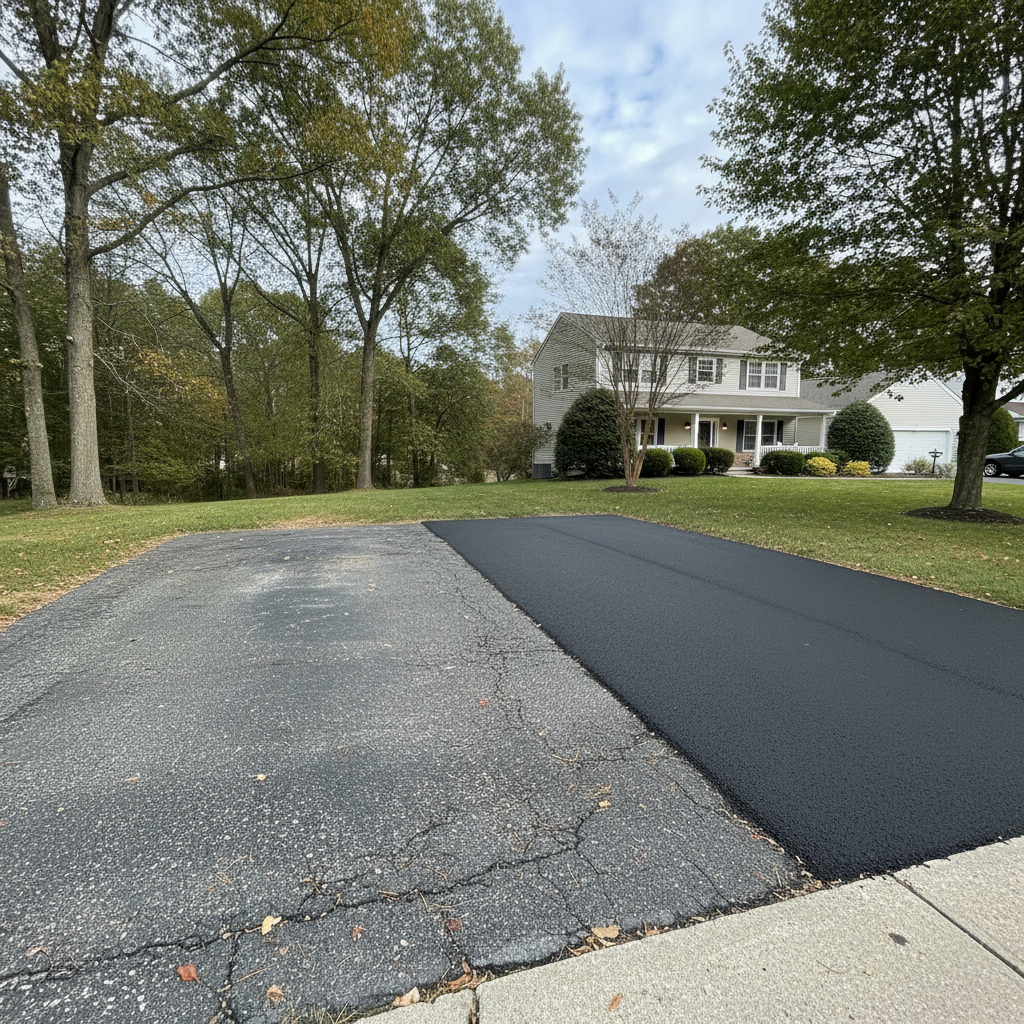
Cracks in your asphalt driveway are a real headache, aren't they? They're not just an eyesore; they're a clear signal that water's about to sneak in and start wreaking havoc underneath. When you spot those lines snaking across your pavement, you've essentially got two main ways to tackle them: crack filling or crack sealing. A lot of folks use those terms like they're the same thing, but they're actually quite different. Knowing which one you truly need can save you a ton of grief and cash down the road.
What's Crack Filling All About?
Okay, let's start with crack filling. This is usually what pops into people's minds when they see a small, narrow crack — maybe a quarter-inch wide or less. You're basically squirting a material, often a cold-pour asphalt mix or a sand-modified asphalt emulsion, right into that crack. The whole idea is to fill that gap and keep water from getting in. It's a quick fix, often something you can even do yourself if you're handy and the cracks aren't too bad.
The stuff used for crack filling isn't really designed to be super flexible, though. It hardens up and just sits there. Sure, it's good for stopping water right away, but it doesn't move much with the pavement. Think of it like putting spackle in a wall crack; it looks better for a bit, but if the house shifts, that spackle might just crack again.
Then There's Crack Sealing
Now, crack sealing is a completely different animal, and honestly, it's what I recommend for most serious cracks, especially around here in Toms River. This method uses a hot-applied, rubberized sealant. It gets heated up really hot, then poured into the crack. The big difference? This material is flexible, like, really flexible.
Our weather here in New Jersey, with those freezing winters and scorching, humid summers, means our asphalt is constantly expanding and contracting. A stiff crack filler simply can't handle that kind of movement. It'll just crack right along with the pavement. But a rubberized sealant? It stretches and shrinks with the asphalt, creating a watertight, long-lasting bond. It's built to move with the pavement, keeping that water out through all four seasons, come what may.
Cost, Durability, and Maintenance
Let's get down to brass tacks about what really matters for your wallet and how long your driveway will last.
- Cost: Crack filling is definitely cheaper upfront. You could grab a bucket of cold patch and DIY it for a few bucks. Crack sealing, especially when a pro does it with the right gear, costs more per linear foot. But remember, cheaper isn't always the best deal in the long run.
- Durability: This is where crack sealing truly shines. Because it's flexible and bonds better, it lasts way longer than crack filling. You might get a year or two out of a good crack fill job, but a professional crack seal can easily hold up for 5-8 years, sometimes even more, depending on the crack and how much traffic it sees.
- Maintenance: Once sealed, you're pretty much set until new cracks pop up or the existing sealant starts to wear down. Crack filling often needs redoing more frequently because the material just doesn't stand up to the elements and pavement movement as well.
- Appearance: A well-done crack seal job, while visible, will look neat and uniform. Some cold-pour fillers, on the other hand, can look a bit lumpy or uneven, especially if they weren't applied perfectly.
My Recommendation for Toms River Homeowners
Look, I've seen countless driveways in neighborhoods from Silverton to the barrier island, and the truth is our soil conditions and climate demand a tough solution. Those freeze-thaw cycles we get here are brutal on asphalt. Water sneaks into those cracks, freezes, expands, and then boom — you've got a bigger problem on your hands: potholes, alligator cracking, and eventually, a full-blown replacement.
For most cracks wider than a hairline, and especially for any cracks that are showing signs of movement or branching out, I'm always going to suggest professional crack sealing. It's an investment, yes, but it's an investment that protects the much larger investment you've already made in your asphalt driveway. It keeps small issues from turning into huge, expensive repairs.
If you've got a tiny, brand-new hairline crack, a DIY crack filler might hold it for a bit. But for anything else, especially cracks that are a quarter-inch wide or more, you're better off with the hot-applied, rubberized sealant. It's really the only way to truly protect your pavement from water damage and extend its life significantly. Don't skimp on this; your driveway will thank you. If you're not sure what you need, give us a call at Classic Asphalt Co. We'll come take a look and give you an honest assessment.