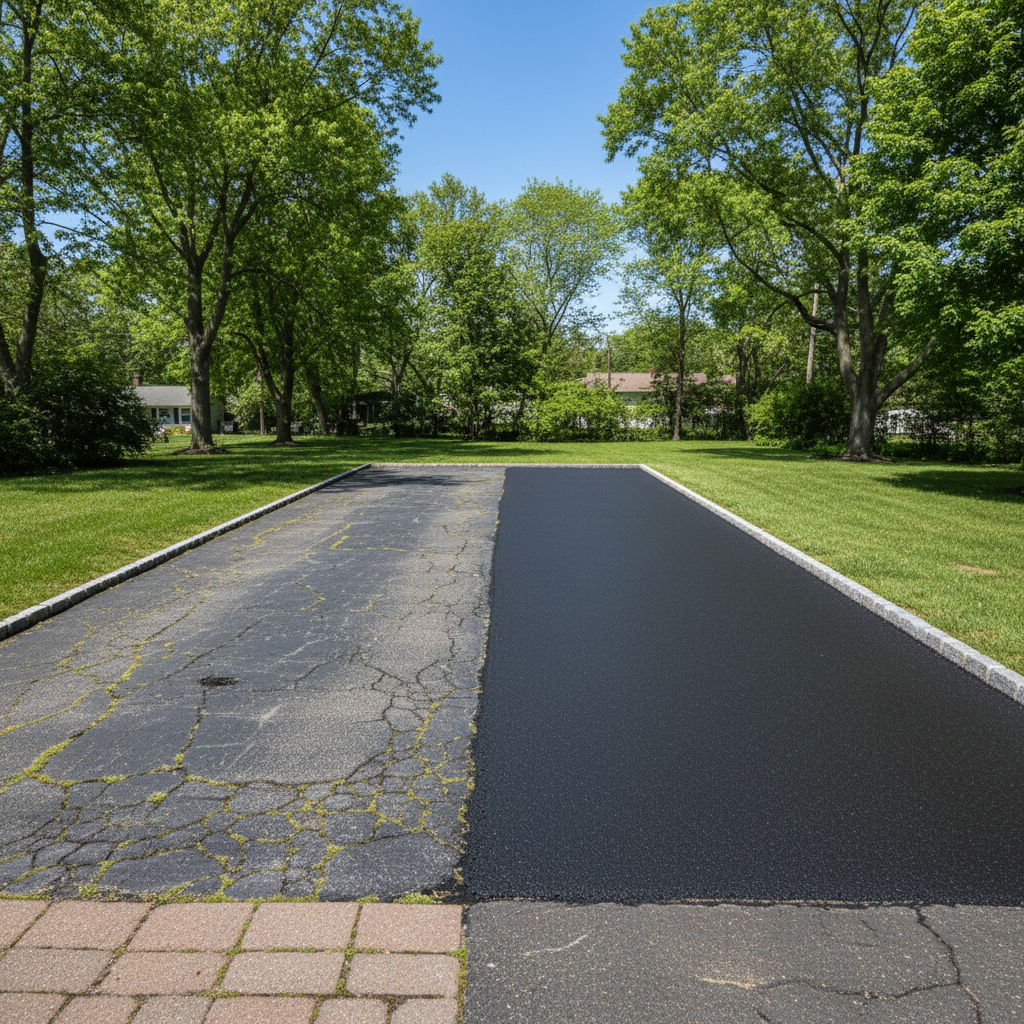
Alright, so your driveway's seen better days. Cracks, potholes, maybe it just looks tired. You know you need to do something, and you're probably thinking about asphalt. Good choice, it's durable and looks great when done right.
But then you start looking into it, and you hear terms like 'overlay' and 'new pavement.' What's the difference? And, more importantly, which one is the right move for your place here in Toms River? I've been doing this for a long time with Classic Asphalt Co. I've seen every kind of driveway issue you can imagine, from the sandy soils of Holiday City to the older developments near the river. Let's talk about these two main approaches.
Asphalt Overlay: The Resurfacing Option
An asphalt overlay, sometimes called resurfacing, is basically putting a new layer of asphalt right on top of your existing one. Think of it like giving your driveway a fresh skin. We'll clean the surface thoroughly, fill any major cracks or potholes, and then apply a new layer of hot asphalt. This is usually about 1.5 to 2 inches thick, directly over the old stuff. We make sure to mill (grind down) the edges where it meets concrete or other surfaces, so it transitions smoothly and doesn't create a tripping hazard.
Pros of an Overlay:
- Cost-Effective: This is usually the biggest draw. Since we're not tearing out the old material, you save a good chunk of money on labor, disposal fees, and the amount of new material needed.
- Quicker Installation: Less demo means less time. We can get in and out faster, which means less disruption for you.
- Good for Minor Damage: If your driveway has mostly surface cracks, fading, or minor depressions, an overlay can make it look brand new and extend its life significantly.
Cons of an Overlay:
- Depends on the Existing Foundation: This is crucial. An overlay is only as good as what's underneath it. If your existing asphalt has severe structural damage – widespread alligator cracking, major potholes that go deep, or sections that are sinking – an overlay won't fix those underlying problems. It's like putting a fresh coat of paint on a rotting fence; it'll look good for a bit, but the problem's still there.
- Can't Fix Drainage Issues: If your driveway pools water because of poor grading, an overlay might not correct that. We can try to build up low spots, sure, but it's harder to re-establish proper drainage without starting fresh.
- Limited Lifespan if Foundation is Weak: If the base isn't solid, those old cracks can eventually reflect through the new layer. We call this 'reflective cracking.'
New Pavement: Tear Out and Replace
This is the full monty. We come in, completely remove all the old asphalt and often some of the base material underneath. Then, we prepare a brand new sub-base, compact it thoroughly, and install fresh layers of asphalt from scratch. This usually involves a binder course (a thicker, coarser layer for strength) and a surface course (a finer, smoother layer for appearance and wear).
Pros of New Pavement:
- Longest Lasting Solution: When done right, a brand new driveway with a properly prepared base will give you the most years of service. You're starting with a clean slate.
- Addresses All Issues: This is the way to go if you have serious structural damage, drainage problems, or if your current driveway is just completely shot. We can re-grade the entire area to ensure proper water runoff, which is super important with the heavy rains we get here in Toms River.
- Strongest Foundation: You get a completely new, properly compacted base, which is the backbone of any good driveway.
Cons of New Pavement:
- Higher Cost: No surprise here. More labor, more material, more disposal means a bigger bill upfront.
- More Time and Disruption: Tearing out and replacing takes longer. Your driveway will be out of commission for a bit longer while we do the work.
- More Invasive: It's a bigger project, with more heavy equipment and noise.
Which One Should You Choose? My Recommendation for Toms River Homeowners
Look, there's no one-size-fits-all answer, but I can give you some general guidance based on what I see around here:
- Go for an Overlay if: Your driveway is generally in good shape. That means the base is solid, there are no significant dips or humps, and the damage is mostly confined to surface cracks, minor potholes, or general wear and tear. It's a great way to refresh your driveway's look and extend its life for another 7-10 years without breaking the bank.
- Choose New Pavement if: Your driveway has serious structural issues. I'm talking about widespread alligator cracking (looks like alligator skin), deep potholes that go through to the base, sections that are clearly sinking or heaving, or if you have standing water problems after rain. If the base is compromised, an overlay is just a temporary fix that won't last. It's an investment, but it's the right investment for long-term durability.
The best way to figure it out? Have someone like us come take a look. We can assess the condition of your existing asphalt, check the base, and talk through your options honestly. We'll tell you if an overlay is a smart move or if you'd be throwing money away on a temporary fix when a full replacement is what you really need. We're here to help you make the best decision for your home and your wallet, not just sell you the most expensive job.